Fate of Escherichia coli
O157:H7 and Salmonella Enteritidis on Currency
The fate of foodborne pathogens Escherichia
coli O157:H7 and Salmonella
Enteritidis on coin surfaces was determined at room
temperature (25°C). A five-strain mixture of E.
coli O157:H7 or Salmonella Enteritidis
of approximately 5 × 10⁴ CFU was applied
to the surfaces of sterile U.S. coins (pennies,
nickels, dimes, and quarters) and to the surfaces of
two control substrata (Teflon and glass coverslips).
During storage at room temperature, E. coli
O157:H7 survived for 7, 9, and 11 days on the
surfaces of pennies, nickels, and dimes and
quarters, respectively. However, the pathogen died
off within 4 to 7 days on both the Teflon and glass
surfaces. Salmonella Enteritidis survived
for 1, 2, 4, and 9 days on the surfaces of pennies,
nickels, quarters, and dimes, respectively. Unlike E.
coli O157:H7, survival of Salmonella
Enteritidis was greatest on both Teflon and glass
coverslips, with more than 100 cells per substratum
detected at the 17th day of storage. Results
indicate that coins could serve as potential
vehicles for transmitting both E. coli
O157:H7 and Salmonella Enteritidis.
Fate of Escherichia coli
O157:H7 and Salmonella Enteritidis on
Currency. XIUPING JIANG and MICHAEL P. DOYLE,
pages 805–807.
Doctors are
struggling to fight a lethal bacteria that is
"resistant to virtually every antibiotic."
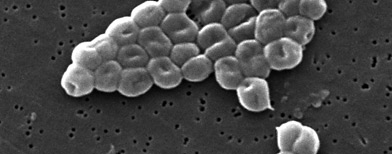
The bacteria, classified as
Gram-negative because of their reaction to the
so-called Gram stain test, can cause severe pneumonia
and infections of the urinary tract, bloodstream and
other parts of the body. Their cell structure makes
them more difficult to attack with antibiotics than
Gram-positive organisms like MRSA.
NEWSER) – Travelers from overseas have brought back an
unwelcome present for us all: a particularly rough
stomach bug that is now spreading across the US.
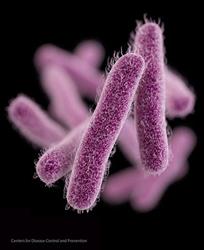
Bonus: This strain of Shigella is resistant to the
go-to antibiotic in such cases, ciprofloxacin, or
Cipro. A CDC report says the agency has tracked 243
cases in 32 states between May of last year and
February of this year. Massachusetts, California, and
Pennsylvania have seen the worst of it, and 20% of
patients had to be hospitalized. The CDC thinks the
illness was brought back to the US from travelers to
India, the Dominican Republic, Morocco, and elsewhere,
reports NPR. But the disease is so contagious that
it's quickly spreading beyond those initial contacts.
"If rates of resistance become this high, in more
places, we'll have very few options left for treating
shigella with antibiotics by mouth," says lead
researcher Anna Bowen. IV antibiotics would follow.
Shigella causes diarrhea, cramps, and vomiting and
spreads easily through contaminated food and water,
including pools and ponds, reports the AP. In most
cases, it goes away on its own after about a week. In
its report, the CDC advises those traveling abroad to
be extra vigilant about washing their hands, watching
what they eat, and using over-the-counter treatments
such as Pepto-Bismol before grabbing Cipro.
|
